
True Story or Tall Tale?
Will the story behind the new film Hidalgo go the distance?
Just as Disney Studios was putting the finishing touches on its new feature film Hidalgo, a growing number of historians and endurance-riding enthusiasts are calling into question the authenticity of the story it tells.
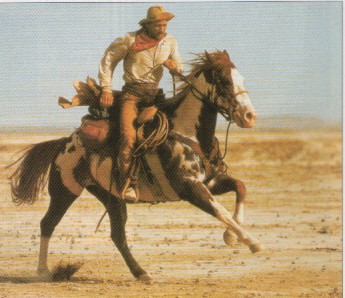
Based on the memoirs of turn-of-the-century cowboy Frank T. Hopkins, Hidalgo was originally set to hit theaters this month but its release has been pushed back to March 2004.
Hopkins, who was born in 1865 and died in 1951, is best known as the cowboy who rode his mustang (named Hidalgo) to victory in a 3,000-mile race in Arabia at the turn of the century. In his writings, Hopkins claims to have twirled ropes in Buffalo Bill Cody's Wild West Show, ridden a wild buffalo bareback and won hundreds of long-distance races around the world, losing only once.
However the veracity of Hopkins' stories has been disputed by the Kentucky-based Long Riders' Guild, an association that recognizes individuals who complete more than 1,000 on one continuous riding journey. After contacting more than 60 academic historians, museum curators and other experts, Guild founder CuChullaine O'Reilly says he could not find a single source to verify Hopkins' claims.
"There is not a shred of evidence to indicate that Hopkins did anything he said he did," says O'Reilly. "There is nothing in the Frank Hopkins mythology which a ranking world expert has not demolished." Much of O'Reilly's research is documented on the Web site www.thelongridersguild.com.
In response, Hidalgo screenwriter John Fusco acknowledges that Hopkins' telling of his life story probably incorporates folklore and legend. But he makes no apologies: "Here we have an American legend, a wonderfully entertaining story, and we have every right to base it on his autobiography," says Fusco, who also wrote the screenplay for Spirit, Stallion of the Cimarron. "It was Hopkins' recollection of how it happened. And in the great tradition of American cowboys, he told some tall tales."
What's more important, adds Fusco, is the fundamental authenticity and value of Hopkins' legend. "I went to the grassroots people, several generations of Wyoming ranchers and the esoteric world of mustang preservationists, where Frank Hopkins' knowledge of the West and Indian horses still inspires."
Nonetheless, in the wake of findings released by the Long Riders' Guild earlier this year, Disney Studios has changed a phrase in a promotional trailer for the movie from "Based on the true story of Frank Hopkins" to "Based on the autobiography of Frank Hopkins."
- Bobbie Lieberman